Grant County Dog Registration Information
Service Dogs and Emotional Support Animals in Grant, West Virginia
If you’re asking where do I register my dog in Grant County, West Virginia for my service dog or emotional support dog, the key point is that service dog status or ESA status is not the same thing as a local dog license. In Grant County, dog “registration” is typically handled through local county government (and sometimes a municipality if you live inside city limits), while service dog and emotional support animal (ESA) rules come from federal and state law.
This page explains how to get a dog license in Grant County, West Virginia, what rabies documentation is usually required, and what to know about service dogs and emotional support animals so you can comply with local rules without paying for unnecessary third-party “registrations.”
Where to Register or License Your Dog in Grant County, West Virginia
Because licensing is handled locally, the most reliable place to start is the county office that administers dog licensing/taxes, plus the sheriff/animal control contacts that may handle enforcement or complaints. Below are example official offices within Grant County, West Virginia you can contact to confirm the correct steps for where to register a dog in Grant County, West Virginia.
Grant County Assessor — Dog Licenses
Grant County Sheriff’s Office (Animal Control / Enforcement Contact)
Overview of Dog Licensing in Grant County, West Virginia
What “registering your dog” usually means in Grant County
When residents say they want to “register” a dog, they usually mean obtaining a local dog license/tag. In Grant County, West Virginia, dog licensing is handled locally through county government, and the county Assessor’s office provides guidance on dog license taxes/tags, including that West Virginia law requires licensing for dogs that are (or will be) six months of age or older.
County vs. city/town licensing
Licensing is often a county-level requirement, but if you live within a municipality, you may also see references to a city/town dog tag or a different fee schedule. This is why it’s smart to confirm your physical address (inside or outside city limits) when you ask where to register a dog in Grant County, West Virginia.
Rabies vaccination and tags (state requirement)
Separate from the county dog license/tag, West Virginia’s rabies laws require that a person vaccinating a dog for rabies provides a rabies vaccination certificate and a rabies tag that is typically attached to the dog’s collar. Keep this documentation handy because rabies compliance often comes up during licensing, boarding, grooming, housing questions, or if there is ever an incident involving a bite.
How Dog Licensing Works Locally in Grant County, West Virginia
Step-by-step: getting a dog license in Grant County, West Virginia
- Confirm the correct licensing office: Start with the Grant County Assessor for dog licensing/tax questions.
- Verify whether a city/town tag applies: If you live inside municipal limits, ask whether there is an additional municipal dog tag/fee or separate requirements.
- Have your dog details ready: Be prepared to describe each dog (basic description) and confirm age (licensing commonly applies at or after six months).
- Keep rabies records current: Even when the local process is described as a “license tax” or “dog tag,” rabies compliance is a common related requirement for responsible ownership and may be requested in certain situations.
- Attach tags as required: If you receive a county dog tag and your dog has a rabies tag, keep them on your dog’s collar as appropriate for visibility and compliance.
Common reasons you may be asked for proof
Even if you have a well-trained service dog or an ESA, a local dog license can still matter for day-to-day issues such as returning a lost dog, handling nuisance complaints, or showing general compliance if an animal control or enforcement question comes up. That’s why “service dog registration” from a private website is not a substitute for a dog license in Grant County, West Virginia.
What to do if you’re unsure who enforces dog rules
If your question is about enforcement (loose dogs, bites, cruelty concerns, or impound procedures), contact the Grant County Sheriff’s Office and ask who handles dog warden/humane officer functions in the county and what documentation they expect for proof of licensing and rabies compliance.
Service Dog Laws in Grant County, West Virginia
Service dog legal status is not a county “registration”
A service dog is generally recognized under federal disability law based on what the dog is trained to do for a person with a disability (task-trained assistance). There is no government-issued “service dog license” required to make a dog a service dog. In other words, you do not need to pay a website to “register” a service dog for it to be legally considered a service dog.
What you can be asked in public (practical guidance)
In many public-access situations, staff typically may ask limited questions focused on whether the dog is required because of a disability and what work or task the dog has been trained to perform. They generally should not demand medical details. Even so, local licensing is a separate issue: the county can still require a dog license/tag for dogs in the county, including service dogs, unless a specific exemption applies.
Do service dogs still need a local dog license?
Often, yes. A service dog may still be subject to the same local licensing and rabies rules as any other dog. If you’re unsure whether Grant County offers a licensing fee exemption for service dogs, ask the Grant County Assessor directly and request the policy in writing or ask where it is published.
Emotional Support Animal Rules in Grant County, West Virginia
An ESA is different from a service dog
An emotional support animal (ESA) typically provides comfort by presence and is associated most often with certain housing-related accommodations. ESAs are generally not the same as service animals for public access, and an ESA does not automatically have the right to go into non-pet public places like restaurants or stores that do not allow pets.
ESAs and local licensing requirements
Even if your dog is an ESA, you should still plan to obtain any required dog license in Grant County, West Virginia and keep rabies vaccinations current. ESA letters or online certificates typically do not replace county licensing or rabies compliance.
Avoid common “registration” confusion
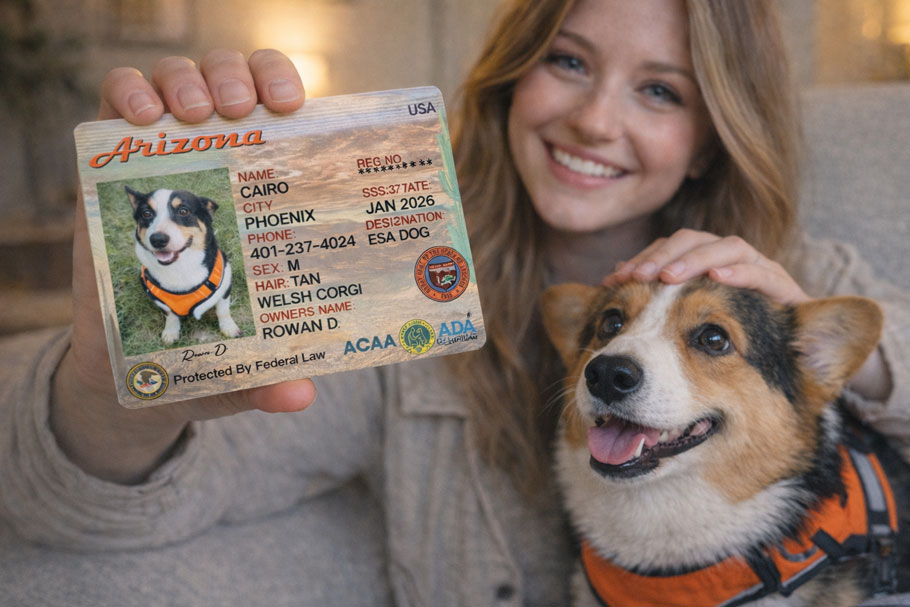
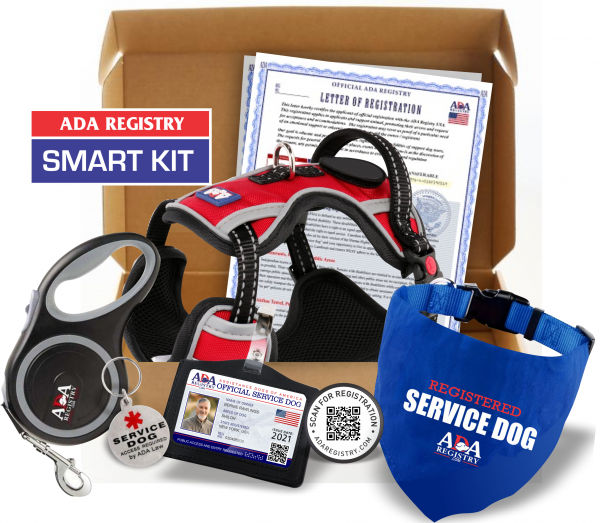
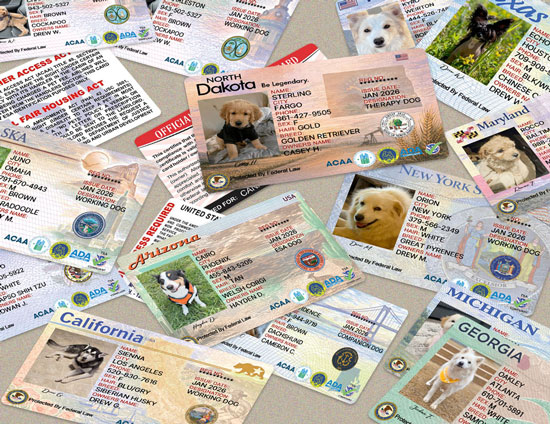
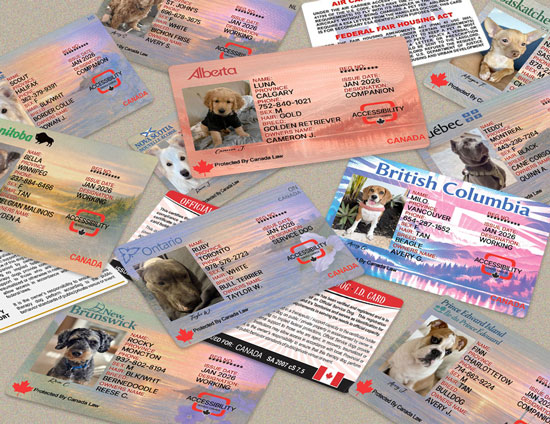
If you’re searching “where do i register my dog in Grant County, West Virginia for my service dog or emotional support dog,” be cautious: many third-party sites sell IDs, vests, or certificates that look official but are not the county’s licensing process. The safest approach is to use local government offices for licensing and your healthcare provider (as applicable) for any ESA-related documentation needed for housing accommodations.
Frequently Asked Questions
Register A Dog In Other West Virginia Counties
Select your county below to get started with your dog’s ID card. Requirements and license designs may vary by county, so choose your location to see the correct options and complete your pup’s registration.
- Barbour County Dog Registration
- Berkeley County Dog Registration
- Boone County Dog Registration
- Braxton County Dog Registration
- Brooke County Dog Registration
- Cabell County Dog Registration
- Calhoun County Dog Registration
- Clay County Dog Registration
- Doddridge County Dog Registration
- Fayette County Dog Registration
- Gilmer County Dog Registration
- Greenbrier County Dog Registration
- Hampshire County Dog Registration
- Hancock County Dog Registration
- Hardy County Dog Registration
- Harrison County Dog Registration
- Jackson County Dog Registration
- Jefferson County Dog Registration
- Kanawha County Dog Registration
- Lewis County Dog Registration
- Lincoln County Dog Registration
- Logan County Dog Registration
- Marion County Dog Registration
- Marshall County Dog Registration
- Mason County Dog Registration
- McDowell County Dog Registration
- Mercer County Dog Registration
- Mineral County Dog Registration
- Mingo County Dog Registration
- Monongalia County Dog Registration
- Monroe County Dog Registration
- Morgan County Dog Registration
- Nicholas County Dog Registration
- Ohio County Dog Registration
- Pendleton County Dog Registration
- Pleasants County Dog Registration
- Pocahontas County Dog Registration
- Preston County Dog Registration
- Putnam County Dog Registration
- Raleigh County Dog Registration
- Randolph County Dog Registration
- Ritchie County Dog Registration
- Roane County Dog Registration
- Summers County Dog Registration
- Taylor County Dog Registration
- Tucker County Dog Registration
- Tyler County Dog Registration
- Upshur County Dog Registration
- Wayne County Dog Registration
- Webster County Dog Registration
- Wetzel County Dog Registration
- Wirt County Dog Registration
- Wood County Dog Registration
- Wyoming County Dog Registration